
Guide to Snake Wranglers and Safety in the Moroccan Desert

In Morocco, snake wranglers are a standard requirement for major productions, particularly when filming in the arid landscapes of Ouarzazate, Erfoud, or the Zagora desert. They generally serve two distinct purposes: Safety (Sweepers)and On-Camera Action (Animal Actors).
The “Sweepers” (Safety Wranglers)
Before any crew members or actors step onto a desert set, a team of professional wranglers—often local experts—is hired to “sweep” the location.
- The Job: They arrive at sunrise to clear the immediate filming area and the “village” (catering, trailers) of indigenous venomous species.
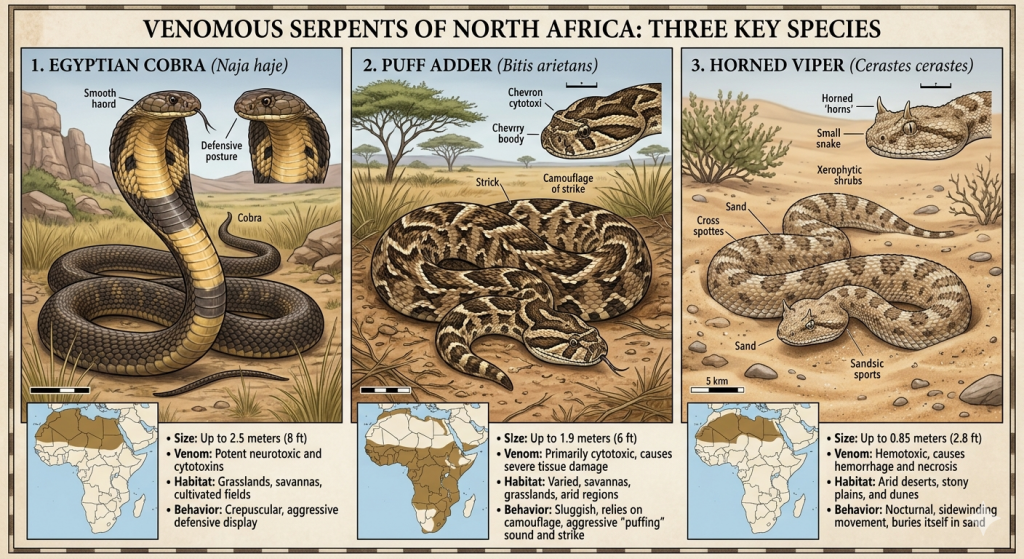
- Target Species: In Morocco, they primarily look for the Egyptian Cobra, the Puff Adder, and the Horned Viper.
- Protocol: Any snakes found are humanely relocated several kilometres away from the set and released. The wranglers typically remain on standby throughout the day to monitor the perimeter.
The “Animal Actors” (Trained Reptiles)
If the script actually requires a snake to interact with an actor or perform a specific movement, production usually brings in specialized animal trainers.
- Local vs. International: While Morocco has a long tradition of “snake charmers” (notably in Marrakesh’s Jemaa el-Fnaa), international film bonds and safety regulations (like those from the American Humane Association) often require certified Film Animal Handlers.
- Welfare & Ethics: Certified wranglers use animals that are habituated to humans and provide temperature-controlled environments to ensure the reptiles are active and healthy for the shot.
Logistics & Budgeting
In Morocco, wranglers are treated as part of the technical crew and are eligible for the 30% Cash Rebate, provided they are hired through a local production service company.
- The “Kit”: Wranglers bring specialized tongs, hook-sticks, and secure transport boxes.
- On-Site Medic: For high-risk areas, the production’s Chief Medical Officer will often coordinate with the wranglers to ensure specific anti-venom for local vipers is kept on-site in a refrigerated unit.