Guide to Drone Filming and Drone Permits in Morocco

Maroc Film Services is well-versed in navigating this process and can secure both the CCM Filming Permit and the essential drone authorisations on your behalf. Our expertise ensures your application is handled efficiently and in full compliance with Moroccan regulations.
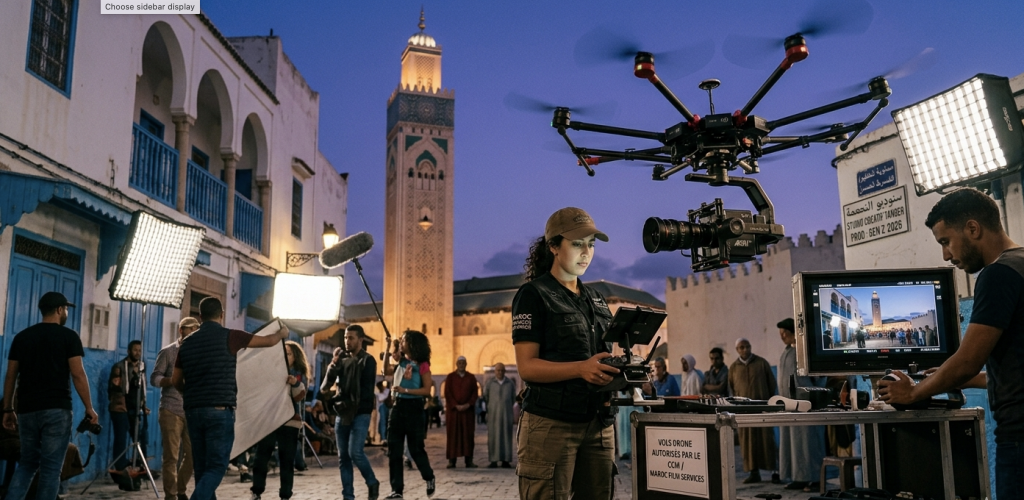
Getting a drone permit in Morocco is a highly structured, sequential process. In 2026, the authorities remain extremely strict; bringing a drone into the country without an Import License will result in immediate confiscation at customs.
For a professional production, here is the roadmap to compliance:
Phase 1: Foundation (CCM Permit)
You cannot apply for a drone permit until you have a general Filming Permit from the Centre Cinématographique Marocain (CCM).
- Requirements: You must provide a script, a detailed production dossier, and work with a CCM registered production company.
- Timeline: This should be your first step, ideally initiated weeks before you need to fly.
Phase 2: Aircraft & Importation
Once you have the CCM permit, you have two choices for the hardware:
- Option A: Import Your Own Gear (Longest Path)
- You must apply for a temporary Import License via the Ministry of Foreign Trade.
- Timeline: Allow at least 40 days.
- Warning: Do not ship or carry the drone until the license is issued.
- Option B: Rent Locally (Recommended)
- Renting from Maroc Film Services is significantly faster. Since the equipment is already in-country and registered, you skip the import bureaucracy entirely.
Phase 3: Flight Authorisation (The Mission Permit)
With your equipment secured and your CCM permit in hand, you must apply for specific Flight Authorisations from the Directorate General of Civil Aviation (DGAC) and local authorities (the Wilaya).
- The Details: You must submit exact GPS coordinates, date/time windows, aircraft technical specs, and pilot insurance/qualifications.
- Review: Authorities conduct a security assessment for every specific flight envelope.
- Timeline: Minimum 10–15 working days.
Critical Summary Table
| Step | Requirement | Responsible Body | Timing |
| 1 | Filming Permit | CCM | Pre-requisite |
| 2 | Import License | Ministry of Foreign Trade | 40 days (if importing) |
| 3 | Flight Authorization | DGAC / Local Wilaya | 10–15 days |
Expert Tips for 2026
- No “Recreational” Use: There is effectively no path for hobbyist or tourist drone use. Permits are strictly for commercial/professional productions.
- Sensitive Zones: If you are filming near government buildings, military sites, or “sensitive” borders (like the Sahara regions), expect the security assessment to take significantly longer or be denied.
- The “Broker” Advantage: Most international crews find it most efficient to have their local fixer (like Maroc Film Services) handle the entire stack of applications to ensure the paperwork matches the latest 2026 security protocols.
Maroc Film Services stands out as a premier local partner by bridging the gap between international production standards and the unique logistical landscape of the Moroccan film industry. With a leadership team that boasts decades of high-level production experience alongside deep-rooted local expertise, the company offers a dual perspective that ensures projects are both creatively ambitious and operationally sound.
From navigating the complexities of the 30% cash rebate and securing specialised CCM film permits to managing large-scale logistics, such as technical equipment transport and specialised vehicle hire, Maroc Film Services provides the transparency and professional rigor required by global studios. Their established relationships with Moroccan authorities and a proven track record of bringing multi-million dollar investments into the region make them an indispensable ally for any production looking to leverage Morocco’s stunning locations and financial incentives.